
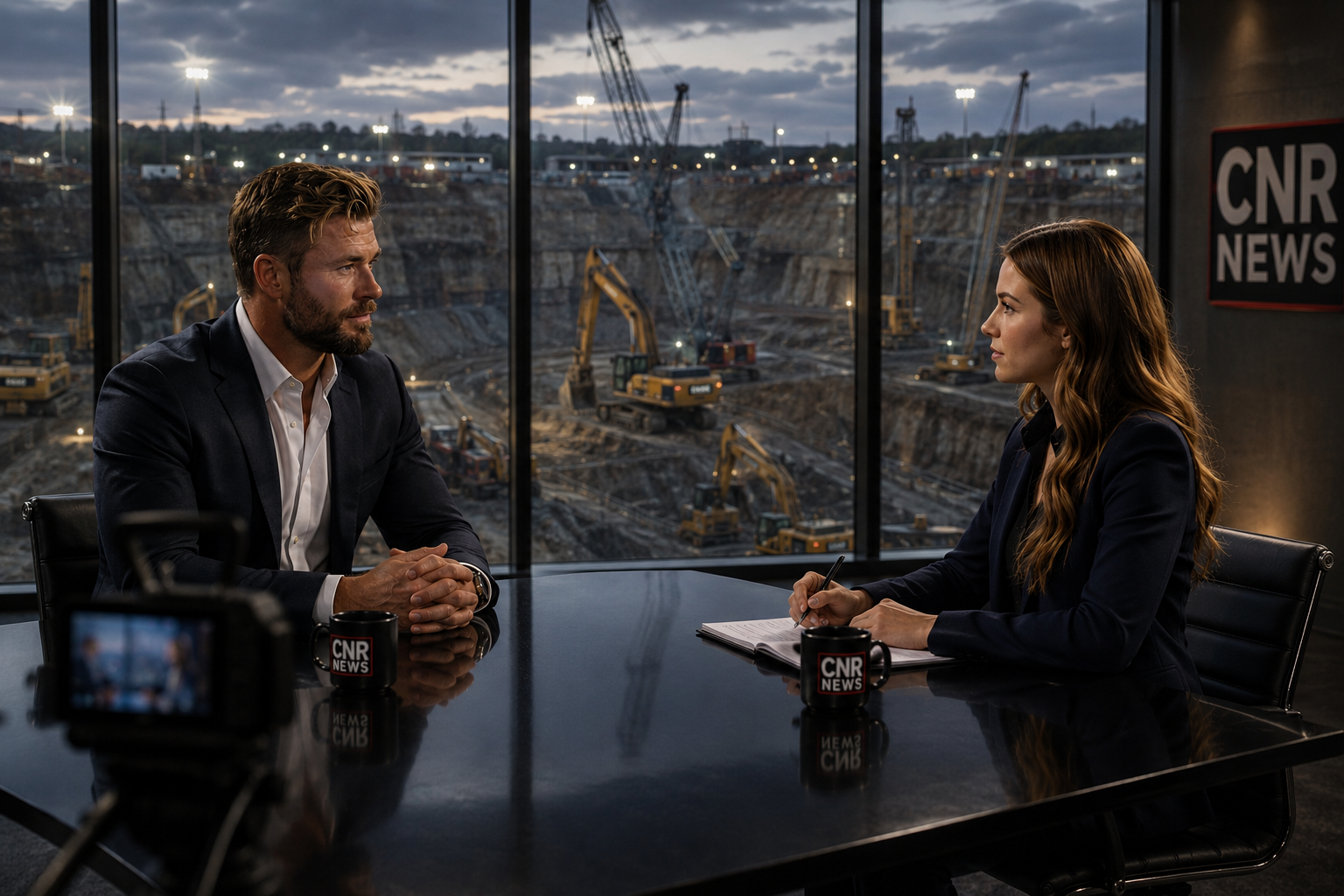
 Emily vs Connor
MADISON SOUTH DAKOTA
Prairie Village
The crowd had thinned considerably by the time Connor finally approached the temporary fencing.
A handful of protesters remained clustered near the entrance while construction workers resumed their duties. Most appeared relieved the situation had not escalated further.
Emily Carter spotted him immediately.
The exhausted look.
The rolled-up blueprints.
The hard hat tucked beneath his arm.
He wasn't security.
He wasn't public relations.
He looked like an engineer.
Exactly what she was hoping for.
"Do you work here?" Emily asked.
Connor looked over.
"Depends who's asking."
Emily smiled.
"Emily Carter."
She extended her hand.
"Independent journalist."
Connor shook it cautiously.
"Connor Evans."
The name meant nothing to her.
Not yet.
"Mind answering a few questions?"
Connor glanced at the remaining protesters.
"Depends on the questions."
Emily opened her notebook.
"Why here?"
Connor laughed softly.
"That's your first question?"
"It's everyone's first question."
Connor nodded.
Fair enough.
"Power infrastructure. Fiber access. Water access. Transportation routes. Population centers."
Emily scribbled notes.
"So convenience?"
"Efficiency."
"At whose expense?"
Connor paused.
There it was.
The real question.
"The people here think their quality of life is being sacrificed."
"They're worried," Connor said.
"They should be."
Emily looked surprised.
Connor continued.
"Any large project changes a community."
"Then why build it?"
"Because people still expect electricity when they flip a switch."
Emily folded her arms.
"That's a pretty simplified answer."
"So is calling it a giant evil building."
A smile tugged at the corner of her mouth.
For the next twenty minutes they talked.
Not argued.
Talked.
About technology.
Economic development.
Jobs.
Property values.
Infrastructure.
Neither convinced the other.
But both left the conversation with something unexpected.
Respect.
As Emily packed her equipment, Connor finally checked his phone.
Six missed calls.
Three text messages.
One voicemail.
All from his father.
Connor grimaced.
"That's not good."
SIOUX FALLS SOUTH DAKOTA
Mapelton Heights
The Evans residence was unusually quiet that evening.
Connor arrived just in time for dinner.
His mother was already seated.
Bradley entered moments later carrying a folder thick with paperwork.
"Nice of you to join us," Bradley said.
Connor sighed.
"I know."
"You missed your report."
"I got tied up."
Bradley sat down.
"Construction issue?"
Connor nodded.
"Protesters."
That immediately caught Christina's attention.
"What kind of protesters?"
Connor shrugged.
"The usual concerns."
"Traffic."
"Noise."
"Property values."
"Data centers."
Bradley leaned back.
"I assume everything remained peaceful."
"It did."
"For now."
Christina exchanged a glance with Bradley.
Connor noticed.
"What?"
His mother folded her napkin carefully.
"Nothing."
"It didn't look like nothing."
Christina smiled.
The practiced smile of a politician.
"The public gets nervous during periods of change."
Connor took a drink.
"They're not entirely wrong."
Bradley's eyebrow raised.
"Oh?"
Connor set his glass down.
"They deserve answers."
"And we gave them answers."
"Not enough."
Bradley remained calm.
"What would be enough?"
Connor thought for a moment.
"I don't know."
"Exactly."
The table fell quiet.
Bradley continued.
"Connor, people don't fear facts."
"They fear uncertainty."
"Every major infrastructure project in history has faced resistance."
"Dams."
"Railroads."
"Power plants."
"The internet."
"This is no different."
Connor wasn't convinced.
Across the table Christina listened carefully.
Not to what was being said.
To what was beneath it.
Fear.
Distrust.
Suspicion.
Those were harder to solve than engineering problems.
Much harder.
Later that evening Christina sat alone in her home office.
The house was quiet.
She reviewed several notes she had written during dinner.
Community unrest.
Infrastructure resistance.
Misinformation.
Organized demonstrations.
The words stared back at her.
A knock interrupted her thoughts.
Her campaign manager stepped inside.
"You wanted to see me?"
Christina nodded.
"Close the door."
The campaign manager obeyed.
Christina looked toward the window.
Beyond it the neighborhood appeared peaceful.
Orderly.
Stable.
Yet she couldn't shake the feeling that something was changing beneath the surface.
"We need to begin drafting policy recommendations."
"For what?"
Christina slid her notes across the desk.
The campaign manager scanned them.
His expression changed.
"You think this is becoming a larger issue?"
"I think we're seeing the beginning of a larger issue."
She leaned forward.
"Critical infrastructure is becoming increasingly important."
"Public resistance is increasing."
"If we wait until it becomes a problem, we're already behind."
The campaign manager nodded slowly.
"What would you like included?"
Christina thought carefully.
Words mattered.
Definitions mattered.
Policy mattered.
"Threat assessment criteria."
"Information sharing."
"Infrastructure security."
"Community risk indicators."
The campaign manager scribbled notes.
Christina paused.
Then added quietly:
"And begin researching expanded domestic threat assessment frameworks."
The room fell silent.
Neither of them realized it.
But the first outline of what would eventually become the Domestic Threat Assessment Expansion Act of 2031 had just been written.
Outside, the neighborhood slept peacefully.
Unaware that history had moved one small step forward.