
“The establishment of the knowledge mines around 350 B.I.T. (Before the Interspecies Truce) greatly expanded animals’ access to human intelligence, as fossilized printed materials buried in the sediment by explosions, natural disasters, and the sands of time were dug up and restored. A significant influx of knowledge came in 273 B.I.T., when the animals’ archeological excavations uncovered the ruins of the humans’ Library of Congress.” –from The History of Animalia by Buick Dyson
When I got home from school the next day, Sherwin was lounging at our house again.
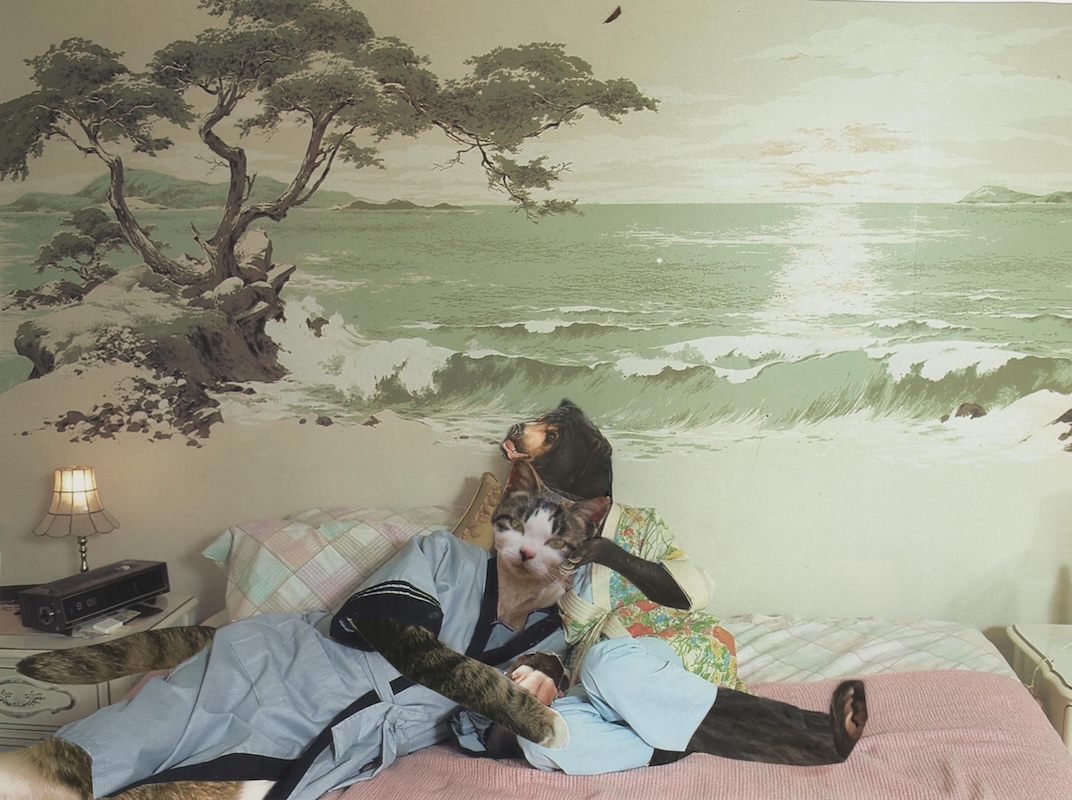 He ordered out for pizza and suggested a game night. As I clawed through my desk drawers, gathering up pencils and sheets of paper for Boggle, I imagined my ancestors, the ursus arctos. Maybe the Brotherhood of Nature had a point about how different our lives are from theirs. There’d have been no talk of bears marrying cats back then. And when my great-great-great-grandmother wanted to go somewhere, she just took off. No trying to figure out how to sneak out without a travel permit.
I carried the Boggle supplies down and plopped them on the kitchen table.
Sherwin took the opportunity to extend his terrible invitation. “So, kiddo. I was thinking we’d go play some hoops tomorrow.”
But I was prepared, and I’d come up with an idea to kill two humans with one bullet: avoid playing hoops with Sherwin and get him to help me escape the Stable. “Sorry, but I can’t. I’ve got a big school project I’ve got to work on. I could actually use your help with it.”
“How so?” Mom asked suspiciously.
“I have to give a presentation on ancient human fishing methods.” Mom shuddered. “Gross, I know. My history teacher said we have to study the mistakes of the past to make sure we don’t repeat them. Anyway, do you think you could knit me a seine net?”
Sherwin puffed his chest out, a patch of white fur poking from the open collar of his shirt. “I don’t know what that is, but I’m sure I can. Sketch me up some specs.”
I grabbed a blank sheet of paper and drew a rough pattern as I talked. “Great. It needs to be big.” Big enough to ensnare a Scratchford guard. “Maybe like two meters by two meters. With weights along the edges.”
Sherwin tilted his head and studied the design. “No problem. Looks like a bunch of chain stitches. Simple enough.”
“It needs to be strong, though,” I said. “You know. For historical accuracy.”
“Of course. I can have it ready in two or three weeks.”
I chewed my claws. “Any way to put a rush on it? My presentation’s this Friday.”
Mom growled, “Friday? Cara, that’s only three days away! Your lack of planning doesn’t constitute an emergency for Sherwin.”
“I could ask for an extension—"
“It’s okay. I get it. I was known to put off a homework assignment or two back in my day.” The cat elbowed me and winked. Sherwin’s extra annoying when he tries to get all buddy-buddy with me, like we’re members of the same species or something. “I don’t put my paws into turbo mode very often, but I’ll make an exception for you, Cara.”
“Thanks,” I muttered. When I thought Mom wasn’t looking, I stuffed the crust from the slice of pizza I’d just devoured into my pocket. I’d been pilfering food all week to add to my growing stash of road rations.
But I forgot Mom’s always watching, trying to decipher my every move, like I’m a spreadsheet full of data that doesn’t quite make sense. “You’ve sure been eating a lot lately.”
“I—uh—I’ve been getting hungry in the middle of the night, so I thought I’d take up a snack for later.”
“She’s probably having a growth spurt,” Sherwin said, motioning toward my crust-bulging pocket. “That’s nothing to worry about. You should’ve seen how much pseudo-tuna I could pound when I was a teenager, Amana.”
“I guess you’re right. My little cub’s growing up so fast.” Mom scooted her chair closer and patted me tentatively on the shoulder. She knows I don’t like being touched, but every so often, she can’t resist.
I decided to use the moment of mushiness to pump her for information. “Mom, can I ask you something?”
“Anything, honey.”
“When Dad left on his research trip, what was he working on?”
The smile remained on Mom’s lips but drained out of her eyes. She picked up a Boggle cube and twirled it in her claws.
Sherwin swatted at a pencil rolling across the table.
Mom let out a deep sigh before finally answering. “It seems so silly. I hate to even say it out loud.”
“What, Mom? Tell me.”
She shook her head slowly and shrugged. “Your father wanted to solve the mystery of Homo sapiens’ extinction.”
Sherwin scoffed. “That’s no mystery. The humans’ Roombas went rogue and sucked them all up. My feline ancestors were well aware of the dangers of vacuums. Tried to warn man not to invite those vortices of death into their homes. The idiots ignored us. Mocked us for our righteous fear.”
I rolled my eyes. I’d started reading Dad’s notebook, the one debunking animals’ various wild theories about what destroyed humanity. So far, I’d only gotten as far as angry birds, mad cows, and a large number of dogs someone irresponsibly let out. Self-aware, evil vacuum cleaners probably had their own chapter in his book. “That’s not a silly topic, but it is…strange. Dad always talked about catastrophic climate change killing off man. He seemed confident about it.”
“He was. But he needed hard evidence. Animals are very attached to their destruction myths. I don’t see any harm in letting critters believe whatever makes sense to them, but he was obsessed with the truth. Humans took him down a deep, dark rabbit hole, a place I couldn’t reach him. His health suffered. He stopped eating. He didn’t rest well. You need to beware of animalmorphizing humans like your father did.” She gave me a harsh look, like she was warning me about the dangers of huckleberry wine.
“Animal-what-izing?”
“Animalmorphizing. It means attributing animal characteristics to humans. We have no way of knowing if they were capable of true suffering, if they experienced our depth of emotion. There’s certainly no evidence to suggest man had our capacity for empathy or compassion.”
“Seems like it from their novels,” I said, without thinking.
“That’s another thing. You need to stop reading those human novels. They’re so dark and violent and depressing. Why can’t you read stories written by animals?”
“Animal stories are lame. Such low stakes. Take mystery novels. The human-written whodunits start with a dead body. The ones animals write are based on mysteries like…who stole the blackberry pie off the windowsill? Or who scarfed the last doughnut? Or who ate my sandwich out of the breakroom fridge? The real mystery, clearly, is who cares?”
“Well I don’t care what killed off the humans. If you ran into one in a dark alley, he’d shoot you on sight and make you into a bearskin rug. I say good riddance to those monsters.”
“Hate on them if you want, but if humans never existed, we’d have no words, no way to express our thoughts and feelings other than grunts and roars.”
Sherwin sniffed. “Don’t give them so much credit, Cara. We’d have invented language eventually, with or without humans. A room full of monkeys hitting random keys on typewriters writing a sentence by accident—that sort of deal.”
“Okay, first of all, that idea is called the infinite monkey theorem, and humans came up with it, not animals. Second of all, humans are the ones who invented the typewrite—" I tried to interject, but the cat was out of the bag now. He’d launched himself into a hissy fit, and he wasn’t about to simmer down.
“I know your father had this,” the cat paused and coughed out the word like it was a hairball, “interest in human history. But he’d have learned more about human beings in the landfill than at the library. The other day, I found a prehistoric shampoo bottle. One of the ingredients listed on it was kangaroo paw. Kangaroo paw!” Sherwin’s tail whipped fervently behind his head as he gave me an intense stare. “Incredibly cruel to kangaroos! But also, downright nonsensical. There’s nothing on earth dirtier than a kangaroo paw. Why would you want to wash your head with a filthy, severed appendage?”
“Sherwin, I think kangaroo paw is a type of flower—”
“And we found a bottle of eye makeup remover just last week. On the back, it said ‘avoid contact with eyes.’ What, did they wipe the stuff on their knees in order to remove their eye makeup? You can’t try to understand humans. That way lies madness.”
“That’s a human quote you just—”
He held up a paw to interrupt me. “Some of them, Cara, and I know this is disturbing, but you’re old enough to hear the truth, no matter how ugly it is. Some of them—and I mean adults, not babies—some of them wore rompers.”
My mother gasped.
“Actually, rompers are coming back into sty—"
“Listen, Cara,” Mom said, as she gathered up dice and began packing up the game. “Animals need to let humanity fade into the past and be forgotten. Hunting information on dangerous creatures can have dangerous consequences. I wish your father had understood that.” Mom closed her eyes and rubbed her temple. Sherwin patted Mom’s back to calm her down and rubbed his forehead against the side of her face. It almost made me puke up my pizza.
# # #
It occurred to me I could use the time it took for Sherwin to knit the fishing net to do some research of my own. That way, when I got to Dad, I could speak intelligently on the topic of man’s extinction, and he’d see how grown up I’ve gotten. Much more interesting, less forgettable. But when I stopped by the Scratchford Public Library on my way home from school the next day, I couldn’t find a single book about climate change. When I asked the librarian about it, she looked at me like I was a snake in a shoe shop.
The week crawled by slower than a two-legged turtle. I continued to squirrel away food and blew my entire piggy bank of savings at the general store on camping gear: a canteen, a lighter, and a sleeping bag. Sherwin showed up late Thursday night, right before bedtime. He had tired eyes, sore paws, and a beautiful seine net. I was so excited to see it and know I’d be able to head out the next day as planned, I accidentally gave him a big bear hug. That made him and Mom way too happy.
After he left and she went to bed, I snuck into the kitchen and used up the whole loaf of bread on peanut butter and jelly sandwiches, wrapping them in wax paper and stuffing them into my lunchbox on their sides, like I was Dr. Dorito cramming files into a crowded shelf at the Den of Knowledge. I could barely squeeze my provisions, the giant net, and dad’s papers into my backpack.
The book and notebook weren’t essential for the trip, but something stopped me from leaving them behind. The weight of my father’s words in my pack felt more like a comfort than a burden.
I’d leave the next morning.